A frozen sump pump discharge line can leave water trapped even while the pump runs. If the sump level is rising or the pump is running without moving water, arrange prompt pump or plumbing service. Look at the exterior outlet only from safe, dry ground. Do not enter a wet basement to reach the pump, plug or electrical panel.
The City of Fargo’s November 13, 2026 freeze-up reminder explains that a blocked, frozen discharge can overheat or disable a pump and allow basement backup. This guide explains that winter failure path. It is not a report that your neighborhood is flooding or that a weather warning is active.
What to Do First
Keep people away from standing water and electrical equipment. CDC’s flooded-home guidance says that power may be switched off from a dry location, but an electrician should handle it when reaching the main switch requires entering water. If electrical equipment has been wet, have it assessed before restoring power.
From a safe position, record what you actually observe: an alarm, rising water, repeated operation, ice at the outlet or no visible discharge. Tell the service company whether water has reached the floor. A photograph of an accessible outdoor outlet can help explain the situation; it does not prove where a concealed blockage begins.
Signs of a Blocked Discharge
Sump Pump Discharge Observations
| What You Notice |
What to Report or Ask |
| Ice or an obstruction at the outdoor opening |
Describe the opening and where the water normally goes. Ask whether the blockage extends into the line. |
| Pump operation with a rising sump level |
Report this as an urgent drainage problem. Ask the technician to check the full path, not just whether the motor turns. |
| Water or ice beside the foundation |
Ask whether the discharge drains away or returns toward the building. |
| A backup pump runs but water still rises |
Ask whether the primary and backup share the same obstructed outlet. |
These observations organize the service call. They do not distinguish every pump, switch, valve or piping fault. See the broader sump pump failure guide if the discharge does not appear to be the only problem.
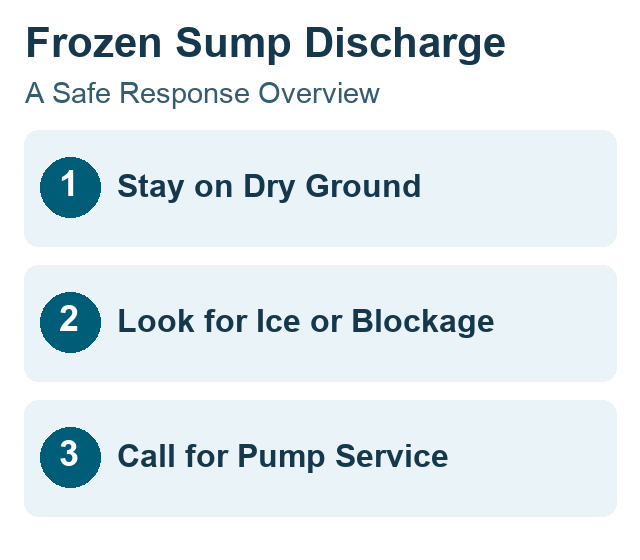 Original response overview. Exterior observations help describe the problem but do not confirm the full blockage. Open the full-size diagram.
Why the Discharge Must Drain
Water left in an exposed line can freeze. The WAYNE submersible sump-pump manual, page 4, calls for exposed discharge piping to slope away from the foundation so remaining water drains out. Have the installer review low spots, the outlet and the route through the yard. Pipe diameter and layout still need to match the equipment and local requirements.
Before Trying to Thaw or Disconnect a Line
Do not treat every hose, pipe or valve as a removable winter extension. The cited WAYNE manual requires rigid piping and a check valve for its listed models. Its service instructions require isolating the power before adjustments, and warn that a thermal protector can restart a pump unexpectedly. An idle motor is not proof that power is isolated.
Have the service provider identify the frozen section and a safe restoration or temporary-discharge plan. Ask which fittings may be disconnected, who isolates the equipment and where the water will go. Do not force a switch, remove a check valve or add chemicals to the basin to work around an unconfirmed blockage. The equipment manual does not establish a universal household thawing procedure.
Check Winter Bypass Rules Locally
Do not assume a basement drain or sanitary sewer is an approved alternative. Fargo’s reminder describes a permit-based seasonal sewer-discharge program from October 1 through March 31. That is a local exception with its own conditions, not permission to make the same connection elsewhere. Ask your wastewater utility which discharge route is authorized for your property.
A Backup Needs a Working Outlet Too
If two pumps discharge through the same blocked pipe, changing the power source does not remove that obstruction. This is a drainage-path distinction, not a finding about your installation. Ask the installer to trace both outlets. Use the sump pump and backup planner to record the arrangement, equipment assumptions and questions.
Before the Next Freeze
- Review where the outdoor discharge ends and whether the line can drain rather than hold water.
- Check the accessible outlet during cold weather. Keep the route away from walkways and neighboring properties, as Fargo’s reminder advises.
- Ask the installer to identify any approved winter configuration and explain how it differs from the normal setup.
- Keep the model manual, service contact, alarm instructions and last inspection date together.
If water has entered the basement, deal with the affected building materials as well as the pump. Our basement flooding guide covers assessment and recovery, while the incident log helps organize observations and contractor records. A working pump does not by itself establish that wet walls, flooring or contents have recovered.
Sources
Prepared by the Water Damage Advisor team. Sources checked November 25, 2026. This is a source-based household guide, not onsite reporting or a credentialed inspection. Follow the instructions for the actual equipment and your local discharge requirements.