Quick Summary
Understand water damage insurance coverage, flood and backup differences, policy questions, claim records and next steps for homeowners and renters.
Homeowners insurance may cover water damage from a sudden, accidental event, such as a burst pipe, while damage from a gradual leak or outdoor flooding can be treated differently. The cause, affected property, policy wording and endorsements all matter. “My home flooded” describes the experience, but does not by itself identify which insurance coverage applies.
Use this guide to identify the coverage questions to ask. For the documents and communication involved in an active loss, follow the water damage insurance claim guide. If water is still entering or access is unsafe, start with water damage first steps.
Does homeowners insurance cover water damage?
Many policies distinguish sudden accidental water damage from long-running leakage. The Texas Department of Insurance describes that distinction, including why mold-related coverage needs its own review. This is useful orientation, not a coverage decision for every state or contract. Ask your insurer to identify the policy language and facts it is using.
| Situation |
Coverage question to ask |
Useful supporting information |
| A pipe or appliance suddenly releases water |
Does the policy cover the resulting damage, and how does it treat repairing the failed component? |
Discovery time, photographs and the plumber’s or technician’s source findings |
| A leak may have continued over time |
What leakage, seepage, maintenance or other exclusion is being considered? |
Known history, earlier reports and the investigator’s findings, with unknown dates left unknown |
| Water backs up through a drain or sump system |
Is there a water-backup endorsement, and does its definition, limit or exclusion apply? |
Source assessment, endorsement text and an account of weather or flooding at the time |
| Outdoor floodwater enters |
Is there a separate NFIP or private flood policy covering the property and loss? |
Flood policy, water-entry observations and building/contents inventory |
| Rain enters after roof or storm damage |
What caused the opening or entry, and which policy provisions address it? |
Safe observations, weather/event timing and a roofer’s assessment |
| Mold is discovered after water damage |
What caused the moisture, and are mold damage, assessment and remediation treated differently? |
Moisture investigation, affected materials, proposed remediation scope and applicable endorsements |
The location where you see water may not be its source. Avoid guessing a cause to fit an insurance category. Record observations accurately, then ask the responsible professional to explain what has and has not been established.
Flood insurance versus homeowners insurance and water backup
Typical homeowners and renters policies exclude flood damage. Water-backup coverage may be added by endorsement, but that does not automatically cover a backup caused by flooding. New York’s insurance regulator explains these distinctions. Your policy and the circumstances of your loss still control.
For NFIP insurance, building coverage and contents coverage are distinct. Having one does not establish that you purchased both. Review the declarations and use the flood insurance claims guide for the NFIP-specific process. FloodSmart describes the two coverage types.
What to find in your policy before the coverage conversation
Keep the declarations, full policy and endorsements together. A declarations page summarizes important details but does not replace the contract. The NAIC’s homeowners guide explains deductibles and the distinction between replacement cost and actual cash value, which accounts for depreciation.
- Insured property and dates: Does the address, named insured and policy period match the loss?
- Coverage categories: Identify building, belongings and additional living expense provisions that may be relevant.
- Limits and deductibles: Ask which apply to this incident and whether an endorsement has a separate limit.
- Settlement basis: Ask how depreciation, replacement conditions and supporting receipts affect payment.
- Duties after loss: Find notification, documentation and cooperation requirements, then request the specific next steps in writing.
- Exclusions and endorsements: Ask which wording changes the answer for your particular cause of loss.
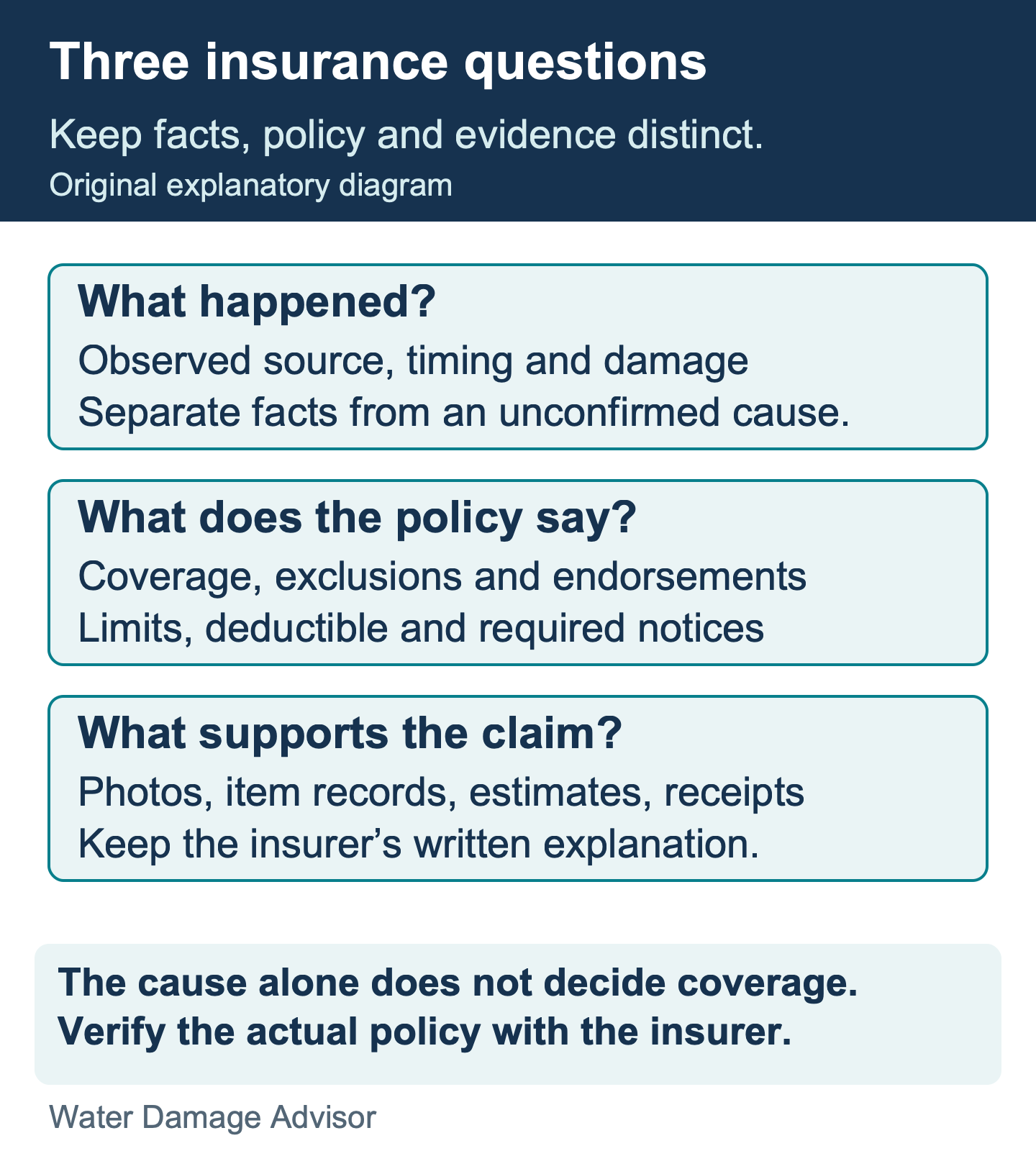 A conversation map, not a coverage determination. Flood, backup and other water events may require different policies or endorsements.
Separate source repair, restoration and rebuilding costs
A single invoice can contain several different tasks: fixing a pipe, removing water, drying materials, handling belongings and rebuilding finishes. Ask the contractor to identify these separately. Ask the insurer to explain its position on each disputed item rather than accepting an unexplained “water damage is covered” or “not covered.”
For example, an estimate may include both emergency drying and replacement flooring. An insurer’s request for more flooring evidence does not explain what it has decided about drying. Keep an item-by-item record of the question, document requested, response and outstanding amount. This is a recordkeeping method, not an example of a real claim or predicted result.
The water damage restoration cost guide explains scope comparison. The quote-comparison worksheet helps separate included work, exclusions and proposed changes.
What about mold remediation and temporary housing?
Do not assume that coverage for a water loss means unlimited mold testing or remediation is included. Ask whether the policy distinguishes damage to an item from mold assessment or cleanup, and whether limits or exclusions apply. Keep moisture-source repair and the proposed mold remediation scope documented.
Additional living expenses may apply when a covered event makes a home uninhabitable, subject to the policy’s conditions and limits. Ask before committing to extended accommodation if possible. Record why the home cannot be used, who assessed that condition, proposed arrangements and extra expenses. Do not assume an NFIP flood policy pays the same accommodation benefits as a homeowners policy.
Choose the guide for your next task
Sources and further reading
- Texas Department of Insurance: Water damage and mold coverage
- New York DFS: Disaster and flood recovery questions
- NAIC: Homeowners insurance
- NFIP: Flood insurance basics