Keep cooking grease out of the sink, garbage disposal and toilet. Collect it in a suitable container, let it cool, and follow your local waste service’s disposal or cooking-oil recycling instructions. Wipe the remaining grease from pans before washing them. The Massachusetts Water Resources Authority explains why fats and oils belong outside the plumbing. If wastewater is already coming back through a drain, switch from meal cleanup to protecting people and arranging plumbing help.
This matters during holiday cooking, even when nothing appears wrong with the sink. In a November 20, 2026 reminder, Miami-Dade’s Water and Sewer Department reported responding to 648 grease- and debris-related clogs during the past year, at a cost of more than $452,000 to the County. Those are local utility response figures, not a national total or a price estimate for repairing your home.
How to Dispose of Cooking Grease
Set up a collection container and a place for food scraps before you start washing dishes. The goal is to remove the waste before it reaches the drain, rather than trying to make a greasy load pass through the plumbing.
- Collect the grease separately. Use a stable, heat-safe container appropriate for the grease’s temperature. Do not pour hot fat into an unsuitable plastic container or handle a heavy pan just to hurry cleanup.
- Allow it to cool before final disposal. Keep the container where it will not be knocked over. Cooled fat may solidify, while some cooking oils remain liquid. Either way, the drain is not the disposal route.
- Scrape and wipe the cookware. Remove food scraps and wipe residual grease into the appropriate waste stream before washing the pan or loading the dishwasher.
- Check the local collection rule. A container approved for trash is not automatically accepted in recycling or food-scrap collection. Check your waste service before choosing the final bin.
NYC Environmental Protection recommends collecting household cooking oil and grease and wiping cookware before washing. Its disposal directions apply in New York City. Use your own sanitation service’s instructions elsewhere.
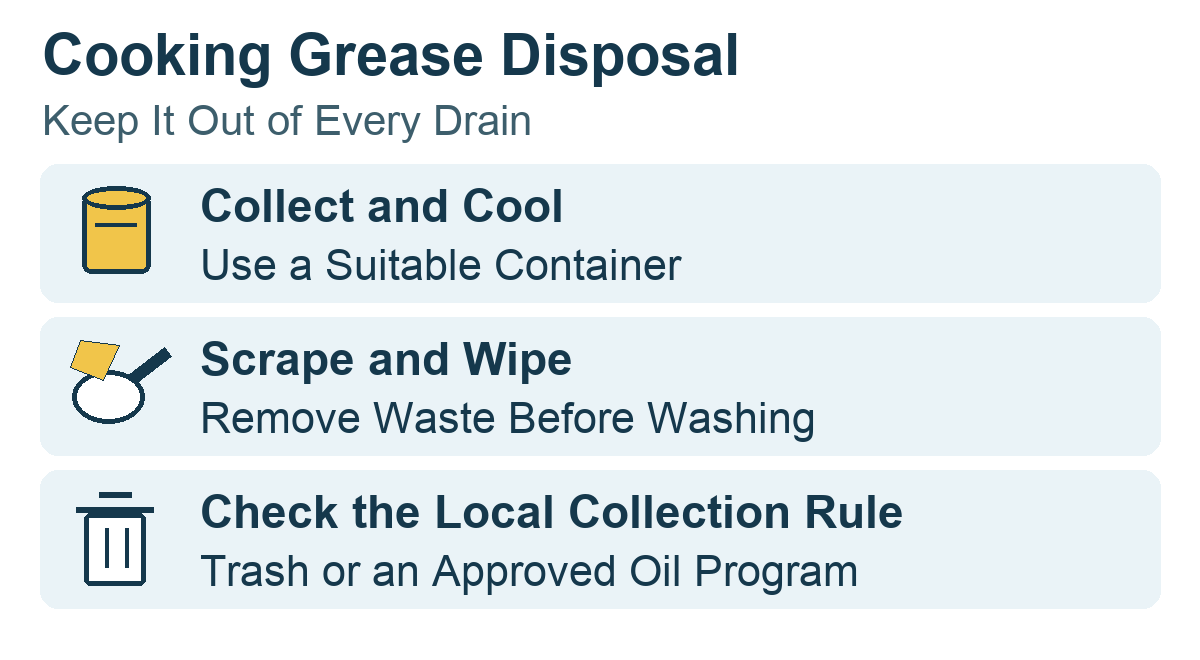 Keep the waste out of the plumbing before dishwashing. This original diagram summarizes the utility guidance linked above and below. View the full-size diagram.
What Goes Where After the Meal
Separate the material before choosing its disposal route
| Material |
Practical Next Step |
| Pan drippings and solid cooking fat |
Collect in a suitable container and cool before using your locally approved disposal route. |
| A thin greasy coating on a pan |
Wipe it off before washing. Put the greasy wipe in the appropriate waste bin, never the toilet. |
| Used fryer oil |
Check for an official cooking-oil collection service. Confirm accepted oil, container and quantity before transporting it. |
| Food scraps and greasy leftovers |
Scrape them out. Use trash or an organics program that explicitly accepts that material. |
| Water backing up through the drain |
Stop adding water to the affected fixture and arrange plumbing assessment. Keep people away from contaminated water. |
Collection options differ. For example, NYC Sanitation’s oil and grease instructions distinguish food scraps from oil and grease, while Tulsa lists local cooking-oil recycling options. Do not assume a program in another city accepts your container or material.
Why Hot Water and Dish Soap Are Not a Fix
Hot water can make grease seem to disappear from the sink. It does not make putting grease into the sewer a good disposal method. Tulsa’s utility guidance explains that hot water and detergent break grease up temporarily. It can then separate and coat the pipe farther along.
The garbage disposal does not provide a separate waste route. Whatever goes through it still enters the plumbing. Scrape food scraps out instead, then wash the dishes. A disposal that runs normally does not establish that the downstream drain is clear.
If You Already Poured Grease Down the Drain
Do not add more grease or use a hot-water flush as a remedy. A single disposal mistake does not tell you where grease has settled or whether a blockage exists. Pay attention to what you can actually observe, rather than assuming either a clear pipe or an inevitable backup.
If drainage is slow or the problem returns, use our drain cleaning guide to prepare for a plumber’s assessment. Tell the plumber what entered the drain, when it happened and whether other fixtures are affected. Grease prevention reduces one avoidable cause of trouble, but it cannot repair an existing damaged or blocked sewer line.
If Wastewater Is Coming Back Into the House
Keep children, pets and other people away from the affected area. Do not operate electrical equipment near standing water or eat food exposed to sewage. NYC’s sewage-cleanup guidance emphasizes avoiding exposure and obtaining professional help for extensive contamination.
Stop using affected fixtures and avoid flushing toilets or running water appliances during a suspected sewer backup. Arrange a plumber’s assessment and contact your local sewer utility through its emergency reporting channel. Describe the affected fixtures and any damage. Seattle Public Utilities recommends documenting damage and retaining cleanup invoices. Its reporting and reimbursement procedures are local, so ask your own utility about the process where you live.
Clearing a blockage and restoring contaminated materials are separate jobs. Our sewage cleanup guide explains the recovery decisions. If water escaped around the sink, dishwasher or cabinets, the kitchen water damage guide helps you organize the affected materials and next steps.
A Simple Holiday Cleanup Checklist
- Put the grease container, scraping tool and waste bin where the cleanup team can find them.
- Tell helpers to scrape plates before loading the dishwasher.
- Confirm the local disposal route for a large batch of fryer oil.
- Keep your plumber’s and sewer utility’s contact details available.
- If a backup occurs, record observations from a safe location rather than continuing normal cleanup through the affected drain.
Prepared by the Water Damage Advisor team. Official utility and public-health guidance checked November 24, 2026. This is a source-based homeowner guide, not onsite reporting or a diagnosis of your plumbing.