Washing machine water damage may start with a supply connection, the appliance itself or a drain problem. Stop use safely and find out which source released the water before treating every laundry-room puddle as the same kind of cleanup. The damaged floor, walls and room below need attention even after the washer is repaired.
For an upstairs laundry room, include the ceiling and rooms underneath in the report. Keep away from any sagging ceiling or wet electrical area. Do not stand beneath a bulge or puncture it to release water.
What to do when a washing machine floods the room
- Keep people away from water and electrical hazards. Do not enter standing water to unplug the washer or reach a breaker.
- Stop the cycle if controls are safely accessible. Do not touch wet equipment or open a door that may release more water. If safe access is uncertain, leave the area for the responding professional.
- Shut an identified supply valve only from a safe position. Do not move the washer or climb behind it to reach a valve. Tell the plumber if water continues or the shutoff cannot be reached.
- Report the affected levels of the home. Include water near the washer, nearby rooms and stains or leaks below.
- Document and arrange help. Record the cycle stage, visible source if known, timing and steps already taken. Do not run another load to test a suspected fault.
CDC advises calling an electrician when reaching the power switch would require entering standing water. Stopping a cycle does not remove the electrical concern around a flooded appliance.
Supply leak, wash-water release or drain backup?
| What you observed |
What the service assessment should establish |
| Water at an inlet hose or supply connection |
Which connection or component failed, whether the flow is isolated and who repairs it |
| Water during filling, washing or spinning |
The model-specific fault and whether any water reached concealed building materials |
| Water at a standpipe, laundry sink or drain connection |
Whether the appliance discharge or household drain is involved and what contamination precautions apply |
| No visible source |
How the unknown source will be investigated before the washer returns to use |
Whirlpool’s leak guidance distinguishes inlet-hose connections from a loose drain hose or backed-up household drain. Its model-specific instructions are not a universal repair procedure for every washing machine. Give the technician the model information and observed timing instead of ordering a part from the puddle location alone.
Wash water and a drain backup should not automatically be treated like a newly released clean supply. Ask the cleanup assessor to explain the source classification and how it changes handling of affected materials. For sewage involvement, follow the sewage cleanup route.
Map the water damage beyond the laundry room
Make a short list of affected locations without moving the washer or opening the building. Include floor seams, wall bases, adjacent closets, door thresholds and the room below. Mark areas that could not be inspected.
For an upper-floor incident, ask for a coordinated assessment of:
- The laundry-room floor covering and subfloor.
- Wall bases and any plumbing or service openings along the water path.
- The ceiling assembly beneath the washer, including insulation where affected.
- Light fixtures or other electrical equipment near the water path.
- Belongings in the lower room and any limits on access while assessment proceeds.
A small stain below does not map the whole wet area. Use the ceiling water damage guide for the questions to resolve before patching. Have damaged or unstable flooring assessed before a heavy washer is moved across it.
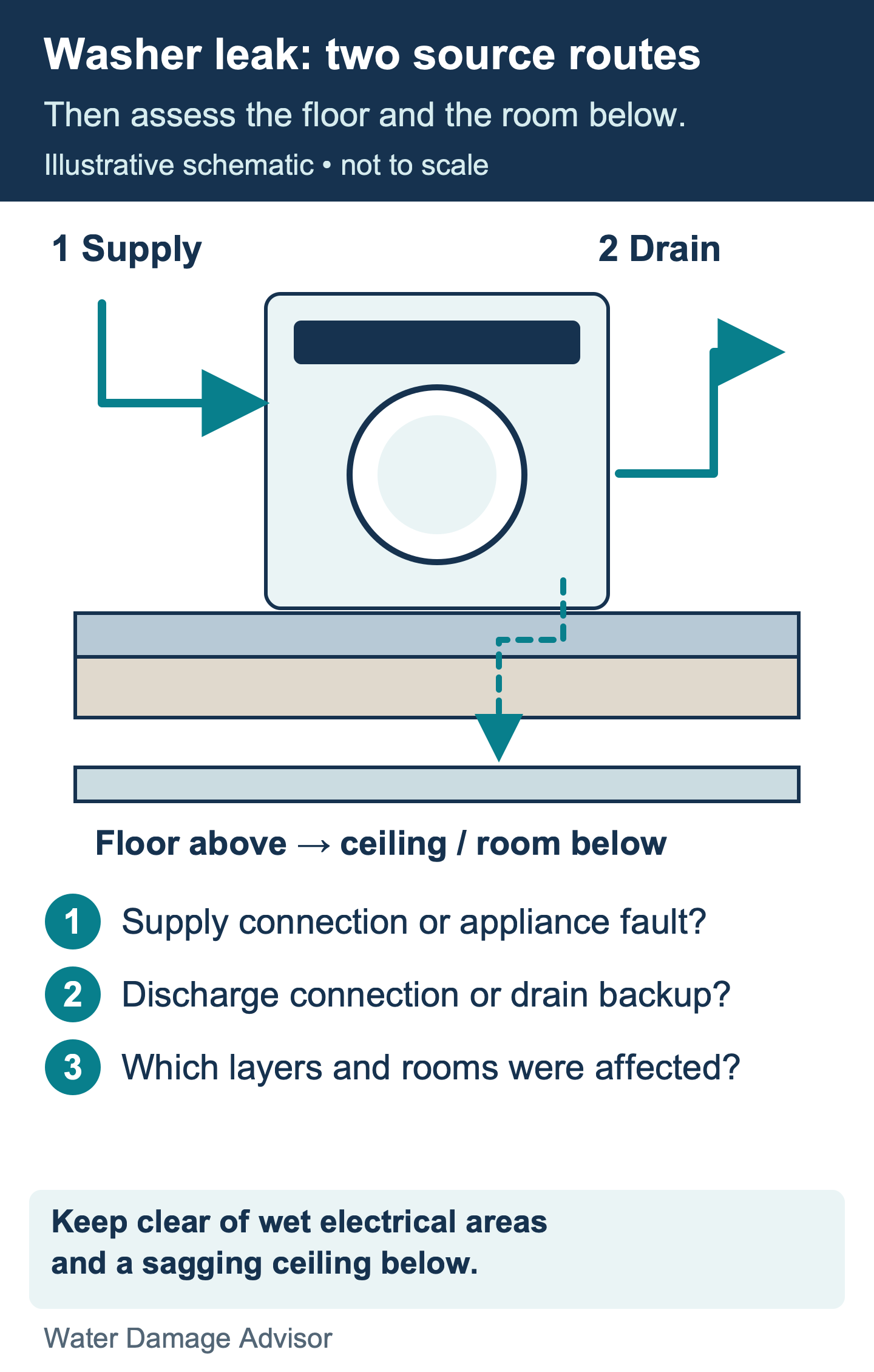 Illustrative source and damage paths, not a model-specific installation plan. Supply and drain problems need different investigation, and the floor and room below may require assessment.
How should washing machine water damage be cleaned up?
The response depends on source, extent, materials and safe access. A small, promptly discovered clean-water spill on an accessible hard surface may need a different response from water beneath layered flooring, a drain backup or a leak into another story. Ask the contractor to make those distinctions explicit.
Do not use an ordinary household vacuum to remove water. For extraction equipment, drying and when a household response is unsuitable, use the water removal guide. Have suspected contamination or mold assessed before using fans that could spread it.
EPA recommends addressing leaks and wet materials promptly. Completion still needs evidence for the affected assembly. An improved floor appearance or a running dehumidifier does not establish that insulation and ceiling layers below are ready to close.
Who handles the different parts of the job?
Ask each provider to identify the work they accept and anything outside their scope:
- Appliance service: identify the washer fault and requirements for returning it to use.
- Plumbing service: address household supply, valve or drain problems identified during the investigation.
- Electrical assessment: resolve affected electrical equipment or unsafe access.
- Restoration and repair: assess the water path, cleanup and drying needs, then coordinate flooring, wall or ceiling work.
These roles may be provided by different companies. Keep a named contact for each unresolved item. “Washer fixed” should not silently become “laundry room and ceiling repaired.”
Before the next load and the final repair
Let the responsible technician determine the appropriate service check before returning the washer to use. Keep the findings and any installation corrections in writing. Do not repeat full cycles to investigate an unexplained leak yourself.
Separately, ask the restoration contractor for the affected-material decisions, location-specific drying findings and the condition accepted by the installer or repair trade. Save photos before the floor or ceiling is covered. If another unit or a rented property is involved, notify the owner or manager and keep the agreed responsibilities in the same record.
What to check after the repair
Ask the installer to explain the model’s requirements for hoses, the drain connection and routine inspections. Whirlpool’s overview of washer leaks describes several possible sources rather than one universal cause. Follow your own manufacturer’s instructions for parts, service and maintenance.
If a drain pan, alarm or automatic shutoff is proposed, ask what it detects or contains, where water is directed and how the system will be checked. Do not treat an accessory as proof that a supply or drain defect has been repaired. Keep the service contact and safe shutoff location available to household members.
Comparing the repair scope
Use the incident log to preserve the timeline and the quote worksheet to separate appliance service from plumbing, extraction, drying, demolition and finishes. Ask whether the lower-story ceiling is included and how concealed damage will be priced and approved.
For a possible claim, ask the insurer what documentation it needs and report known facts without guessing the cause or duration. Do not assume that every washer leak is covered or that an appliance warranty pays for damage to the building.
Sources and further reading
Return to the water damage guide for the wider recovery plan.