When water damage is found in a vacant or unoccupied home, arrange a safe local assessment, stop the source through an authorized person and document what is known about the timeline. A house may have been unattended for days or longer, so hidden wet materials and uncertain discovery dates deserve explicit attention.
Do not ask a neighbor or caretaker to wade into water, operate wet electrical equipment or enter below a sagging ceiling. Have the appropriate emergency service, utility or qualified trade address immediate hazards. Remote photographs cannot establish that the property is safe to enter.
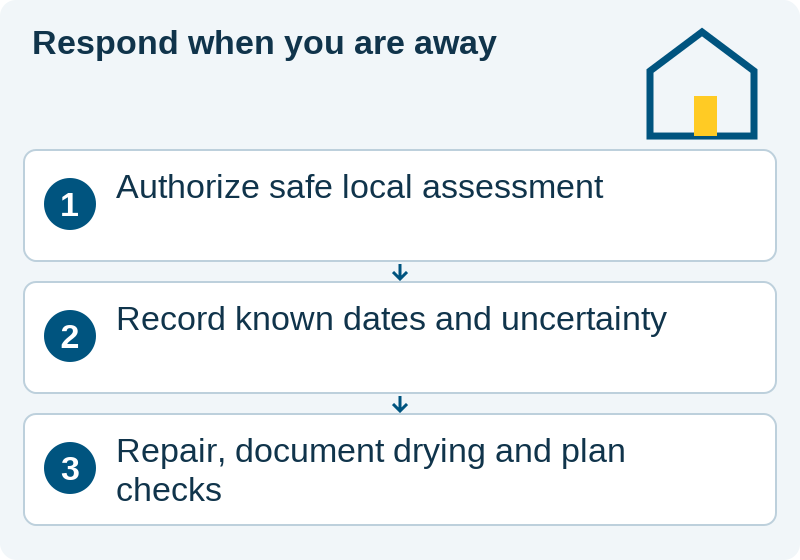 Respond when you are away. A guide to the decisions explained below. Open the diagram for a larger view.
Identify who can access the property, approve an assessment, authorize urgent source control and receive updates. Explain the limits in writing. For an estate, rental or property held by several owners, confirm the person entitled to sign for the work.
Give the contractor the utility status, known alarm information and safe access instructions. Do not send keys or access codes through a public form. Agree which photographs, observations and written scope you need before approving work beyond the immediate authorization.
Document uncertainty instead of filling gaps in the timeline
| Known fact |
Useful record |
Avoid assuming |
| Last confirmed dry visit |
Dated inspection note or photograph |
That the leak began immediately after that visit |
| Discovery of damage |
Time, reporter and observations |
That discovery time is the actual loss start |
| Sensor or utility alert |
Original timestamp and what the alert measured |
That an alert identifies every affected room or the exact failed fitting |
| Source isolation or repair |
Trade report, date and work performed |
That fixing the source also dried hidden materials |
| Uninspected areas |
A list of access limits |
That a dry-looking room proves all cavities are dry |
Assess the Building Beyond the Visible Puddle
Ask about flooring layers, wall cavities, insulation, cabinets and adjoining rooms. Report sewage, floodwater or an unknown contamination history. EPA cautions that clean-water drying guidance does not apply unchanged to contaminated water and recommends experienced professionals where needed. EPA material and contamination guidance.
If mold is suspected, ask for a moisture and material assessment before ordinary cleaning or repair. Do not instruct someone to run household fans through uncertain contamination. A long absence can make the history less clear, so the assessment should state its assumptions and limits.
Check Vacancy and Unoccupancy Terms with the Insurer
Notify the insurer promptly and describe how the home was being used. Ask how the policy defines vacant and unoccupied, what conditions apply and which dates or maintenance records it needs. Do not rely on a universal 30- or 60-day rule from a general article.
The Texas insurance department’s consumer guide notes that vacancy exclusions depend on the number of days specified in the policy. The actual form, endorsement and jurisdiction control your claim. Ask about heating, water shutoff, inspections and any applicable requirements directly with your insurer. Texas home-insurance guide.
Manage a Remote Restoration Project
Request a location-based scope, source findings, photographs, an affected-material list and drying updates. Keep emergency mitigation separate from rebuilding. Agree who will be present for deliveries, utilities, inspections and security when crews leave.
Ask how newly discovered damage is priced and approved. Have the contractor explain material readings and completion criteria instead of relying only on the number of equipment days. Use the quote worksheet and a dated private project log to keep separate providers aligned.
Prevent Another Unattended Loss
After the source and damage are addressed, arrange an inspection and maintenance plan appropriate to the property and policy. Consider a responsible local contact and suitable leak alerts or shutoff equipment. EPA distinguishes local moisture detection from monitoring water-flow patterns. Neither detects every roof, drain or groundwater event. EPA leak-detection guidance.
Before shutting utilities off for an extended absence, ask the appropriate trade about heating, fire protection, appliances and freeze precautions. A generic instruction to close every valve can interfere with systems the home needs. Record the agreed plan and update it when occupancy or seasons change.
Sources
Prepared by Water Damage Advisor. Sources checked November 15, 2026. This guide is an editorial synthesis of the sources below.